Student Centric Methods
The organization follows a student-centered approach to education wherein they use an approach that incorporates learning via experience, participation, and solving problems to help students increase their knowledge, skills, and overall growth. Experiential learning happens via laboratory experiments, industrial visits, fieldwork, internships, and project exhibitions.
Students get the opportunity to prove theoretical concepts by applying those practically during laboratory sessions. Students can learn about modern technology and industrial practices during industrial visits and fieldwork. They can practice what they learned in classrooms at places of employment. Project exhibition gives them a chance to create innovative models.
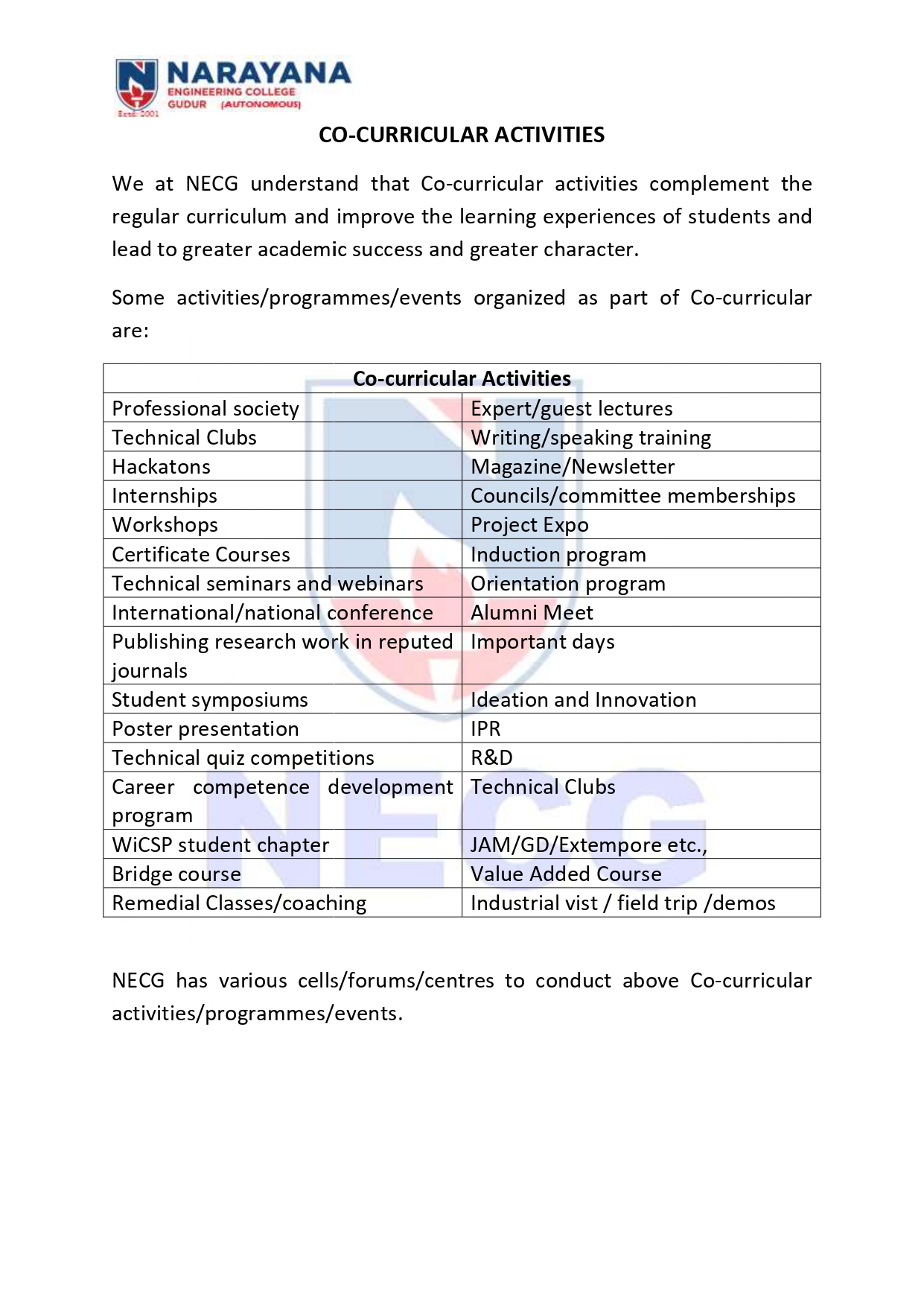
The learning method that involves participation can happen through active learning techniques, project work, paper presentation, mini-project work, hackathons, seminars, symposiums, student organizations, and professional organizations. Active learning includes brainstorming, think–pair–share method, and group discussion among others.
Technical clubs as well as hobby clubs give students a platform to improve themselves. Problem-based learning requires students to solve open-ended problems through analyzing them and brainstorming them. Faculties act as facilitators and they take part in case studies, assignments, tutorials, and projects among other tasks related to solving problems.